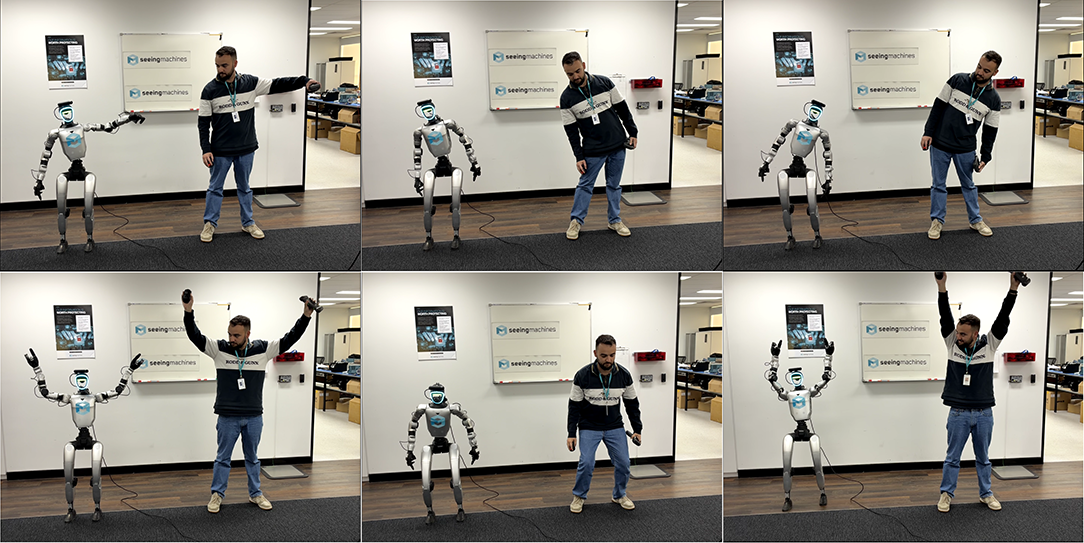







Giving Robots a Real-Time Understanding of the People Around Them
Seeing Machines Limited has published a new Technical Paper demonstrating how robots and other Physical AI systems can build a detailed, real-time understanding of people directly on the device they're running on.
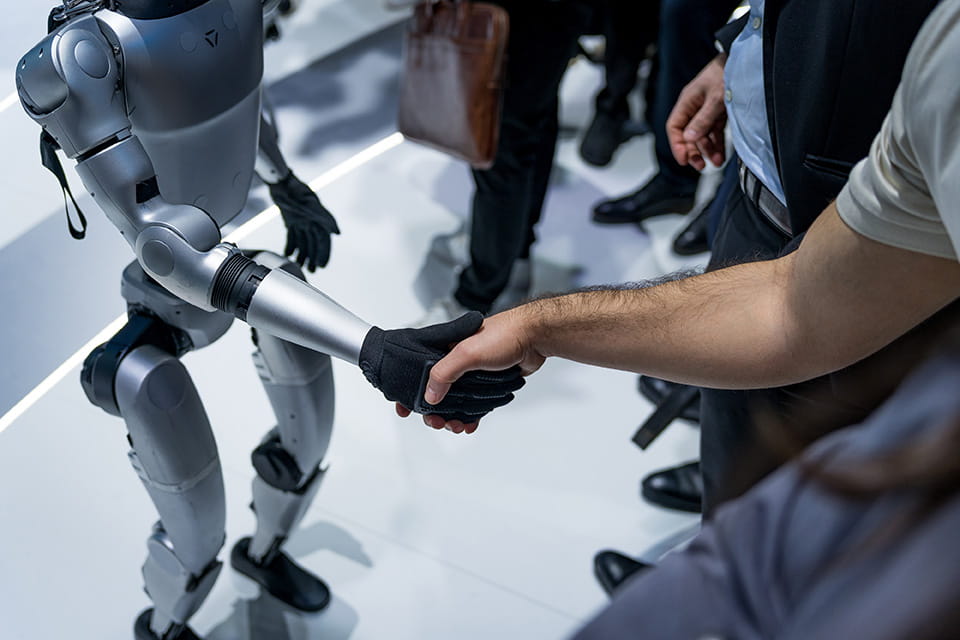
As robots increasingly enter spaces designed for humans, real-time human understanding is emerging as a foundational capability for the next generation of Physical AI. In our latest Technical Paper, Seeing Machines demonstrates how Human Mesh Recovery (HMR) enables robots to build a detailed, real-time understanding of human posture, position and movement directly on embedded devices, supporting safer and more effective human-robot interaction.
WATCH THE VIDEO HERE
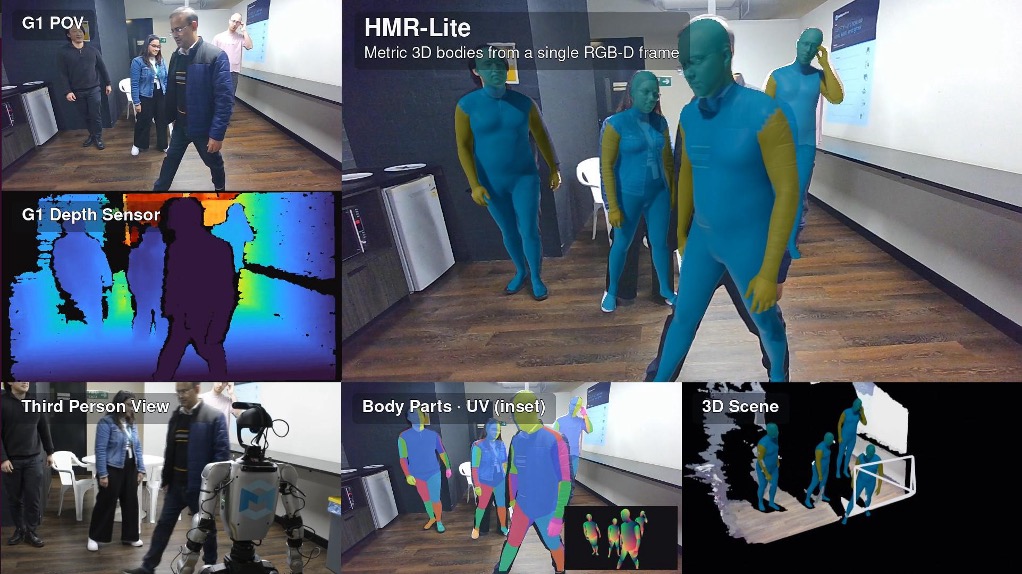
See how we bring our top-tier, real-time 3D human tracking to the Unitree G1 robot, connecting our research to what’s actually needed to get robots working in the real world.
The challenge: understanding people, not just detecting them
For robots and people to work safely and effectively side by side, presence detection isn’t enough. Robots need to understand where a person is, how they’re positioned, and how they’re moving, quickly enough to respond appropriately as the interaction unfolds.
The problem has always been cost. High-fidelity 3D human reconstruction typically demands significant computing power, making real-time deployment on embedded hardware a difficult engineering challenge.
Introducing Human Mesh Recovery (HMR)
Our new paper examines Human Mesh Recovery (HMR), a core capability of Seeing Machines’ Human-Centred Physical AI Platform, launched in August 2026. Using a single camera view, HMR reconstructs a detailed 3D representation of a person, giving a machine a real-time picture of their location, posture and movement. It’s built for dynamic, shared environments where robots and people work in close proximity, including factories, hospitals and warehouses. Because processing happens locally on the device, HMR lets robots respond to a person’s position and movement in real time, without depending on a remote cloud connection, keeping response times fast regardless of network conditions.
Benchmark results that stand out
Benchmarked on the NVIDIA Jetson Thor, HMR delivers a combination that’s hard to achieve: accuracy, low latency and a small model footprint, all at once. The results show state-of-the-art accuracy alongside substantially faster inference and far fewer parameters than significantly larger frontier models. It’s also flexible on hardware: HMR supports both standard RGB cameras and RGB-D cameras (which add depth information) without any increase to its parameter count, so developers aren’t forced to trade capability for camera choice.
Why this matters for Physical AI
As robots move into spaces built for people, understanding human posture and movement on-device, in real time, becomes foundational. HMR gives Physical AI systems the situational awareness needed for safer operation, more capable interaction, and more productive deployment alongside people.
Want the full technical detail? Read the technical paper to see the complete benchmark results and methodology behind HMR.
Watch the video here where we bring our top-tier, real-time 3D human tracking to the Unitree G1 robot, connecting our research to what’s actually needed to get robots working in the real world.